Moving from the Bronx to Brooklyn is one of the longer inter-borough relocations in New York City, geographically and logistically. Depending on your specific neighborhoods, the distance can stretch from 15 to 25 miles by road, with multiple possible routes, each with their own traffic patterns and timing considerations. It’s a meaningful move between two boroughs with distinct personalities, housing stock, price points, and everyday rhythms. Here’s what to plan for.
Understanding the Cost
Bronx-to-Brooklyn moves are billed as local NYC moves, hourly, based on crew size and time. Brooklyn moving prices are slightly higher than in the Bronx, which is one of the most affordable boroughs for moving services in the city.
A studio apartment move between boroughs typically costs $600–$1,000 with a two-mover crew working 3–5 hours. A one-bedroom runs $1,000–$1,600 with three movers over 5–7 hours. A two-bedroom costs $1,800–$2,800 with three to four movers for a full day of 7–9 hours.
The borough-crossing distance adds travel time to the billing clock. NYC movers charge for travel time, typically calculated as one hour of labor for the round trip between their warehouse, your Bronx address, and your Brooklyn destination. For a Bronx-to-Brooklyn move, the transit leg itself is longer than a within-borough move, which adds to the hourly total. Factor this in when comparing estimates.
Local NYC movers currently charge between $85 and $110 per hour per mover due to increased labor costs and fuel surcharges in 2026.
The Bronx Departure
The Bronx has a more varied housing landscape than Brooklyn, a mix of larger apartment buildings, two-family homes, and true residential neighborhoods in areas like Riverdale, Pelham Bay, and Belmont. In the Bronx, parking can be easier in some neighborhoods than in Brooklyn, and alternate-side parking rules still apply. Moving truck access is generally more manageable than in dense Brooklyn corridors, though bus lanes and fire hydrant placement require attention on move day.
If you’re leaving a larger Bronx apartment building, confirm elevator access requirements and any building move-out fees well in advance. Building move-in and move-out fees in NYC buildings typically run $150–$500 per move. Some Bronx high-rises have specific move-out window requirements that differ from Brooklyn’s typical 9-to-5 weekday windows, verify this with your building management before booking a mover.
Brooklyn is where the logistics get more specific. Your destination neighborhood shapes the difficulty of the arrival more than almost any other factor.
In Brooklyn’s brownstone corridors, Carroll Gardens, Fort Greene, Park Slope, Crown Heights, stoops and narrow streets dominate. Alternate-side rules can force a truck relocation mid-move. Most professionally managed buildings in Downtown Brooklyn, Williamsburg, and Fort Greene require a Certificate of Insurance from your mover confirming liability and property damage coverage.
The COI must be submitted to your building management before moving day, typically 24–48 hours in advance. Confirm this requirement at your Brooklyn destination as early as possible, because it determines which movers can actually serve your building. Not all movers handle COI paperwork in-house; some charge additional fees.
Walk-up buildings in Brooklyn add significant time and labor. A move that might take three hours in a building with elevator access can easily stretch to six or seven hours when stairs are involved, particularly in older brownstone neighborhoods. For a Bronx-to-Brooklyn move that already carries a longer transit leg, a fifth-floor walk-up at the destination can push the total job to a full day.
In DUMBO and the area around Barclays Center, newer buildings almost always require COI and have specific loading dock or elevator reservation requirements. Confirm these logistics at your specific address, not just the neighborhood.
The Route
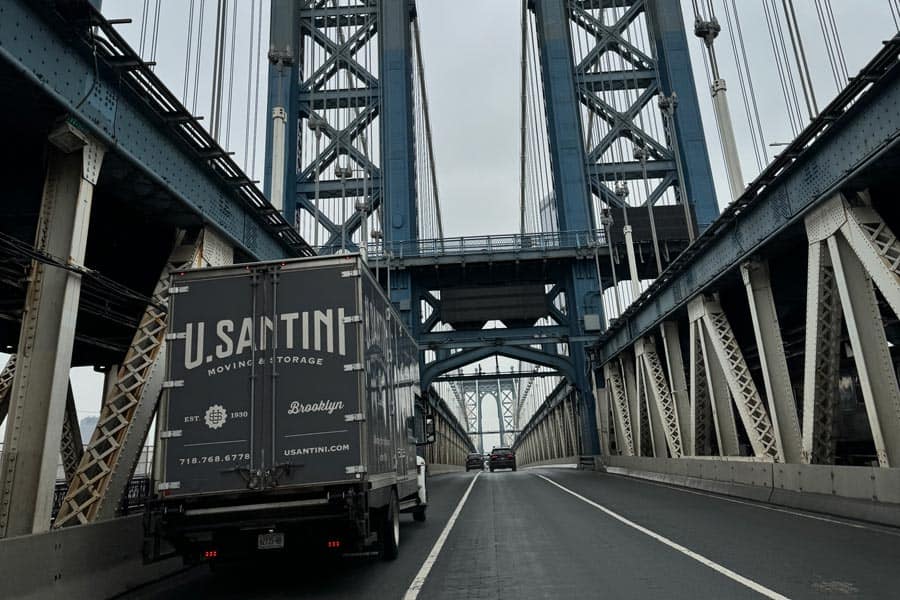
The routing between the Bronx and Brooklyn runs through Manhattan as the primary option for most origin and destination combinations. The major crossings, the Willis Avenue Bridge, the Third Avenue Bridge, or the Triborough (RFK) Bridge, feed into the FDR Drive or the Major Deegan/Cross Bronx corridor depending on direction.
The George Washington Bridge, Lincoln Tunnel, and Holland Tunnel can be nightmarish during peak traffic periods. Early morning weekday moves give you clear roads and full daylight for settling in. The same principle applies for Bronx-to-Brooklyn, a 7 or 8 AM departure from the Bronx gets you through Manhattan and into Brooklyn before rush hour builds into its mid-morning peak.
For moves through Manhattan, NYC tolls on bridges like the RFK Bridge are significant. Some movers include tolls in the quote; others bill them afterward. Confirm this in your written estimate.
The Lifestyle Shift
The Bronx and Brooklyn are both outer boroughs, but the living experience is genuinely different between them. The Bronx tends toward more residential density in its southern sections, with pockets of true neighborhood character in areas like Belmont (Arthur Avenue), Fordham, and Riverdale. It’s generally more affordable than Brooklyn, 2025 average monthly rents in the Bronx run $1,600–$2,000 for studios, $1,900–$2,600 for one-bedrooms, and $2,500–$3,500 for two-bedrooms.
Brooklyn’s average rents are higher. The average monthly rent for a one-bedroom in Brooklyn runs $3,499 to $3,566 depending on neighborhood. Two-bedrooms run $4,451 to $4,547 per month. Some of the most expensive neighborhoods include Williamsburg for studios and DUMBO for two-bedrooms.
That cost gap is real, and it’s worth being clear-eyed about. People move from the Bronx to Brooklyn for a variety of reasons, proximity to specific employment, cultural fit, relationship changes, neighborhood preference, but it’s rarely a financial upgrade in pure rent terms. Brooklyn offers the density of arts, food, culture, and nightlife in many neighborhoods that draws people willing to pay more for proximity to it. Make sure that tradeoff is working in your favor before signing a lease.
Timing and Booking
The same NYC timing principles apply here with extra weight given the longer transit leg. Scheduling between the 8th and 20th of the month avoids the end-of-month demand surge for both movers and building elevator reservations. Mid-week moves on Tuesday, Wednesday, or Thursday carry lower rates and better availability than weekend moves.
Peak season runs May through September, moving company rates run 10–20% higher during this window. October through April offers the best combination of pricing and availability for a longer inter-borough move like this one.
Book four to six weeks in advance during peak season. Outside peak season, two to three weeks is usually sufficient, but locking in your date early gives you better flexibility on crew size and timing windows, both of which matter more on a Bronx-to-Brooklyn job than on a short within-neighborhood move.
U Santini Moving & Storage handles inter-borough moves across all five boroughs, including the longer Bronx-to-Brooklyn run, with the routing knowledge, COI handling, and borough-specific logistics that make this specific move go cleanly. Get a written estimate based on both exact addresses, floor levels, and building requirements before committing to any crew size or pricing structure.