

How to Use Packing Paper
U.Santini Moving & Storage explains how to use packing paper for your New York City, NY move. Get in touch today to schedule service!
Around 25% of apartments in cities like New York are located in walk-up buildings. That means a significant portion of every move in this city involves carrying everything, every box, every piece of furniture, every awkward item, up multiple flights of stairs through narrow hallways with tight landings. It’s one of the most physically demanding move types that exists in any urban environment, and it requires a different approach than a standard apartment move.
Here’s how to execute a walk-up move in NYC effectively, whether you’re moving in or out.
NYC apartments have notoriously narrow doorways and staircases with challenging angles. Measure your furniture, especially large pieces like couches, mattresses, and dressers, then measure every doorway, hallway width, and staircase turn in both your old and new buildings. Many NYC moves have been derailed by a couch that simply won’t make the turn on the third-floor landing.
Visualize the path each item will take from the moving truck to its final destination. Note any tight corners, low ceilings, light fixtures, or other protruding elements that may cause maneuvering challenges. Do this for the building you’re leaving and the building you’re arriving at. A piece of furniture that navigated your old stairwell successfully may not navigate the new one.
If measurements are tight, consider disassembling furniture before moving day. Once taken apart, a large furniture item becomes smaller and lighter to carry up stairs. In extreme cases, a sofa that simply won’t make a turn at a landing, hoisting through a window is the last resort.
Walk-up moves are not situations to minimize crew size. The additional labor cost of a larger crew is almost always offset by the reduction in total hours on a walk-up move. A two-person crew that takes five hours on a difficult walk-up costs the same as a three-person crew that takes three and a half hours, and the three-person crew generates fewer parking tickets, less physical damage risk from rushed carries, and less physical strain on everyone involved.
A move that might take three hours in a building with elevator access can easily stretch to six or seven hours when stairs are involved. Discuss crew size explicitly with your moving company when booking, and describe your specific building situation in detail, floor number, stairwell width, distance from street to entrance. A reputable mover will recommend the right crew size rather than defaulting to minimum staffing.
Large furniture that came into a building in pieces can go out the same way. Bed frames, sectional sofas, dining tables, bookshelves, and modular furniture should be fully disassembled before moving day. When disassembling furniture, label all hardware and parts clearly. Place screws and small pieces in labeled zip-lock bags to keep everything organized and prevent anything from getting lost during the move.
Items that most commonly cause problems on narrow NYC stairwells: large sofas and sectionals are the most frequent issue. A sectional that came apart to move in can be reassembled upstairs. Mirrors, mattresses, and large appliances require specific handling techniques, these are the items worth discussing in detail with your crew during the pre-move walkthrough.
Box weight and size matters more in a walk-up than in any other move type. Use smaller boxes for heavy items like books, dishes, and tools. Large boxes become impossible to carry up stairs when packed too full. Keep box weight under 40 pounds when possible.
Use a color-code system for your boxes according to the rooms they belong to in the new place. This visual system makes unloading and organizing faster once the crew is working under physical fatigue from stair carries.
Pack and set aside a separate essentials box, items you’ll need immediately after the move, and carry it yourself. The last thing you want after a full day of stair carries is hunting through unlabeled boxes for your phone charger or medications.
The physical contact between furniture and stairwell walls, banisters, and floors on every carry creates higher damage risk than anywhere else in the building. Protecting the stairwell before the move starts, with moving blankets on banisters, cardboard on floor surfaces, and corner guards on wall edges at every landing turn, reduces damage to the building and reduces your liability for repairs. Most NYC landlords hold tenants responsible for move-in damage to common areas.
Professional movers use specialized equipment for walk-ups: furniture dollies, stair-climbing hand trucks, moving straps, and furniture sliders. Corner guards and padding protect both furniture and the building’s walls. Ask your mover specifically what protective equipment they bring for walk-up moves.
A walk-up apartment with no street parking available is the single most logistically demanding standard move in New York City. There is no freight elevator to reserve, no loading zone to coordinate with building management, and no simple solution to getting heavy furniture up three flights of narrow stairs while the truck idles in traffic or sits double-parked with hazards on.
The NYC DOT requires temporary no-parking permits for large trucks in most borough neighborhoods, and these must be secured 48–72 hours in advance. In Brooklyn, brownstone corridors have stoops and alternate-side rules that can force truck relocation mid-move. In Queens, areas like Astoria and Sunnyside often offer better curb access, but school zones and bike lanes still require attention.
The cleanest solution is to confirm parking logistics with your mover before moving day, have the permit posted in advance, and build in extra time for the inevitable parking complications that arise in dense NYC neighborhoods.
The best time to move into walk-up apartments is during fall or spring, the weather is moderate, you won’t be sweating through summer carries or battling winter ice on outdoor stairs, and you’re outside the peak season surcharge window.
If you’re flexible, move on a weekday for less neighborhood traffic, better mover availability, and lower rates. An early morning start, 7 or 8 AM, gives you the full day before fatigue sets in, avoids afternoon traffic during transit, and often means fewer building occupants in the stairwell while the crew is working.
Walk-up moves are demanding, and they take longer and cost more than elevator moves of equivalent size and distance. That’s the honest baseline. The work here is in the preparation: knowing exactly what’s going in and what won’t, having the right crew size, protecting the building, and giving yourself enough time in the schedule to handle the inevitable complications that come with navigating four or five flights of New York City stairs.
U Santini Moving & Storage executes walk-up moves across all five boroughs daily, with the crew size, equipment, and building-specific experience that makes the difference between a draining day and a well-managed one. Get a quote that accounts for your specific floor, building access, and stairwell conditions before committing to any number.
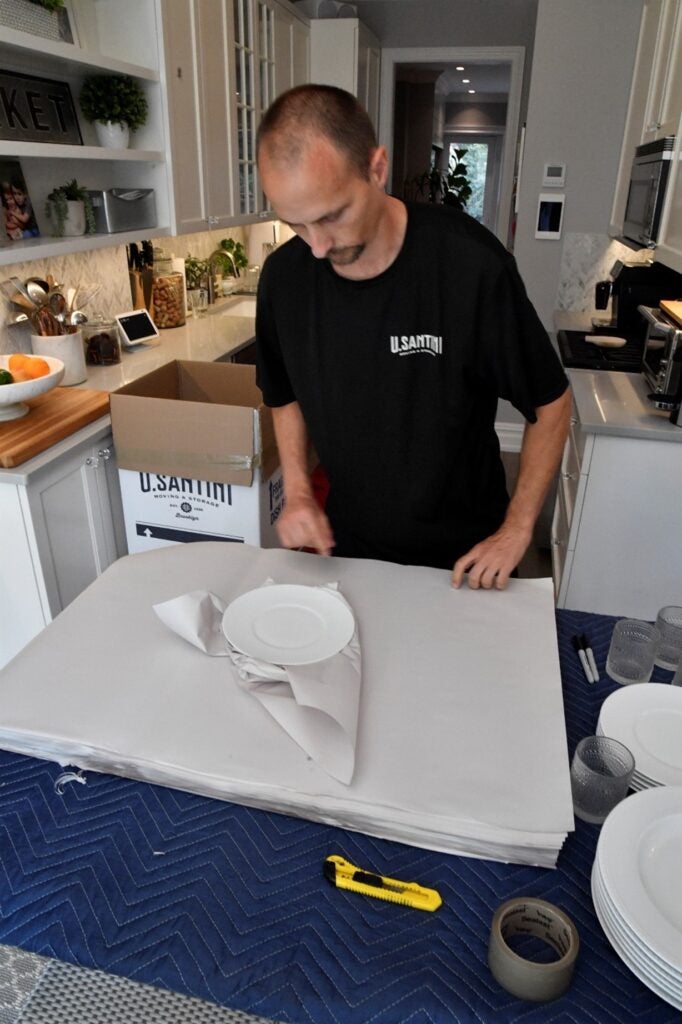
U.Santini Moving & Storage explains how to use packing paper for your New York City, NY move. Get in touch today to schedule service!
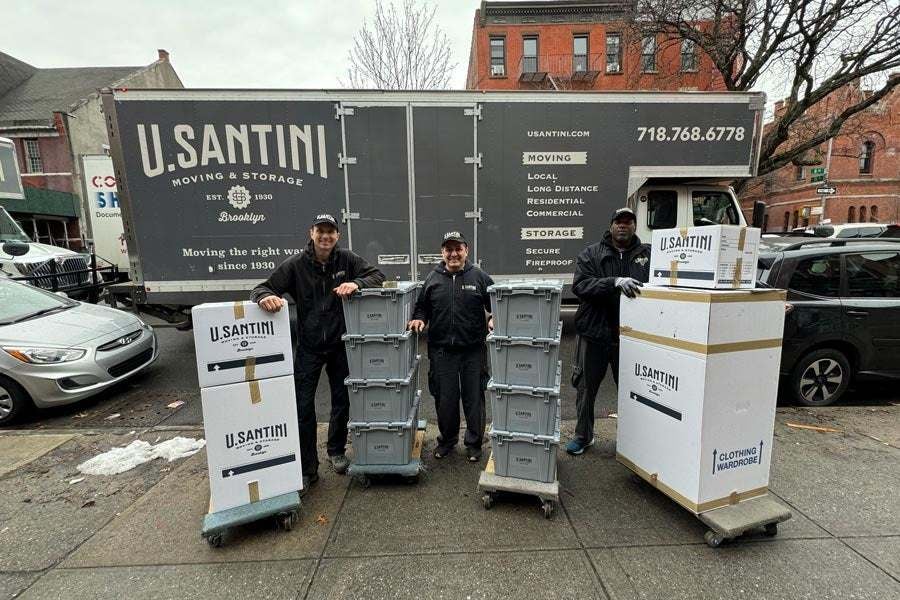
Learn expert tips for dealing with wet boxes during a move from U.Santini, ensuring your belongings stay safe and dry, no matter the weather.