

Understanding the Different Types of Moving Services
Experience hassle-free moves throughout New York City with our moving services. From local to long-distance, trust us for exceptional service.
If you Google “how much does it cost to move in NYC,” you’ll get a frustrating answer: “It depends.”
Websites will tell you a studio move costs between $400 and $1,500. That’s an $1,100 gap, almost a broker’s fee in New York terms. How is anyone supposed to budget with that kind of range?
At U. Santini Moving & Storage, we believe you deserve better than a guessing game. Since 1930, we’ve priced thousands of moves across all five boroughs, from NYU dorm rooms to Park Slope brownstones, Astoria apartments to Upper West Side penthouses. We know exactly where the money goes.
In 2025, moving costs in New York City have shifted significantly. Labor rates are up across the industry, bridge and tunnel tolls have increased, fuel costs remain elevated, and building insurance requirements are stricter than ever. The days of hiring two guys with a van for $300 are essentially over, at least if you want your furniture to arrive intact and your move to happen legally.
Here’s the honest, behind-the-scenes breakdown of what you’ll actually pay to move in NYC this year, and practical strategies to keep that number from ballooning out of control.
Let’s get the baseline numbers out of the way. Based on 2025 market rates for licensed, insured professional movers in NYC, here’s what you should budget for a local move within the city (Brooklyn to Manhattan, Queens to the Bronx, etc.):
Why is the range within each category so wide? Because moving a first-floor 1-bedroom on a wide, truck-friendly street in Astoria is genuinely half the work of moving the same size apartment from a fifth-floor walk-up on a narrow one-way street in the Lower East Side. The apartment size is just the starting point.
To understand your moving price, you have to think like a mover. We don’t pull numbers from thin air, we use a formula based on three core factors that determine how long the job takes and how much labor it requires.
We estimate how much space your belongings will occupy in the truck, measured in cubic feet. Volume determines both the truck size and the crew size needed to move everything efficiently.
This is where New York City moves get expensive compared to moves anywhere else in the country. Access conditions vary wildly from building to building, and difficult access adds real time to the job.
By law and industry standard, NYC movers charge for travel time, typically calculated as one hour of labor. The crew needs to get the truck from our facility to your apartment before the move and return it afterward. Even if you’re only moving 10 blocks away, we still have to reach you through New York traffic, and that time counts.
For moves between boroughs or to outer areas of the city, travel time may be calculated at 1.5 or 2 hours depending on distance and typical traffic conditions for your route.
These are the line items that don’t always appear on the initial quote or that catch first-time movers by surprise. Plan for them now so they don’t blow up your budget on moving day.
Cost: $0–$50 from a legitimate mover (but potentially massive delays if you skip this)
Most managed buildings in NYC, co-ops, condos, and luxury rentals especially, require movers to provide a Certificate of Insurance before they’re allowed to enter. The COI proves the moving company carries liability insurance and workers’ compensation coverage.
If your mover is uninsured, the “man with a van” you found on Craigslist, they legally cannot enter the building. You’ll be stuck on the curb with all your belongings while the building super turns your movers away. We’ve seen this happen, and it’s a disaster.
Cost: $150–$400 depending on apartment size
Cardboard boxes aren’t free. Even if you pack everything yourself to save on labor costs, you still need boxes in various sizes, packing tape, bubble wrap for fragile items, packing paper, and wardrobe boxes for hanging clothes.
Money-saving option: Ask about our reusable bin rentals. Plastic moving bins are cheaper than buying cardboard, significantly stronger and more protective, and better for the environment. We drop them off before your move and pick them up from your new place afterward.
Cost: $75–$300+ per item
Pianos, pool tables, marble tabletops, oversized artwork, antique furniture, and safes all require special equipment, extra crew members, or specific expertise to move safely. If you have specialty items, mention them when requesting your quote so they’re factored into the price upfront.
You’ll encounter two types of quotes from professional NYC movers. Understanding the difference helps you choose the right option for your situation.
Best for smaller, straightforward moves.
How it works: You pay for the actual time the crew spends on your move, billed in 15 or 30-minute increments.
The risk: Traffic. If the moving truck gets stuck on the BQE for an hour due to an accident, you pay for that hour. If the elevator in your new building breaks down and the crew has to wait 45 minutes for repairs, that’s on your tab too.
Verdict: Hourly pricing works well for studios and small 1-bedrooms where the scope is clearly defined and there’s minimal risk of complications.
Best for larger or more complex moves.
How it works: We visit your home in person or conduct a detailed video walkthrough. We see exactly what you have, assess the access conditions at both locations, and give you one binding price for the entire job.
The major benefit: If we hit unexpected traffic, if the elevator breaks, if parking is worse than anticipated, you don’t pay a penny more. The risk shifts entirely from you to us.
Verdict: Flat rate pricing is essential for 2+ bedroom moves, brownstones, long-distance moves, or any situation with potential complications. You get a guaranteed final price before moving day.
We see it happen every month, and it never stops being frustrating to hear about.
A client decides to save money by hiring a budget mover who quoted $400 for a 1-bedroom move, hundreds less than established companies quoted for the same job.
On moving day, the movers load everything onto the truck. Then, when they arrive at the destination, they refuse to unload until the client pays an additional $500 for “stair fees,” “long carry charges,” and “packing materials” that were never mentioned in the original quote. The furniture is essentially held hostage. The final price hits $900, more than the legitimate quotes, and the furniture arrives with scratches, dings, and mysterious stains.
This practice is unfortunately common among unlicensed movers, and it’s completely legal for them to do because the original quote wasn’t binding.
Real peace of mind comes from transparency and reputation.
At U. Santini Moving & Storage, the price we quote is the price you pay. No hostage situations, no surprise stair fees, no mysterious charges appearing on moving day. Just 95 years of family reputation on the line with every job we take.
Ready to find out what your 2025 NYC move will actually cost? Request a free, transparent quote today.
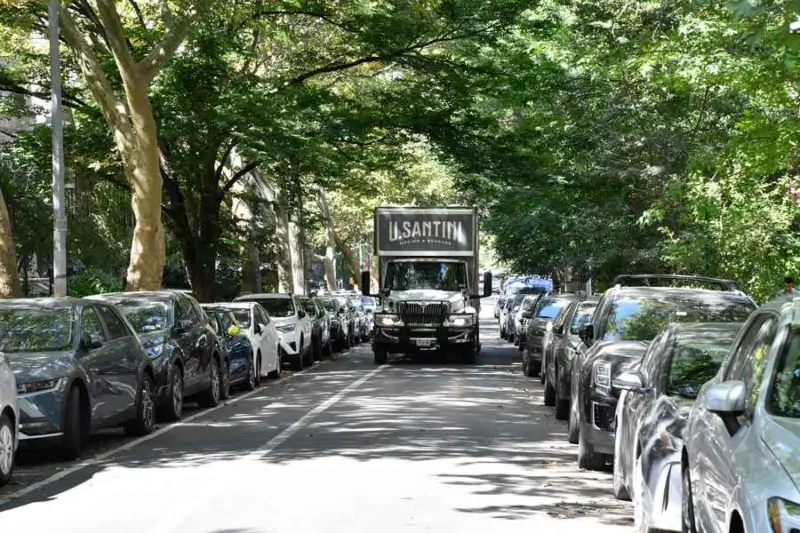
Experience hassle-free moves throughout New York City with our moving services. From local to long-distance, trust us for exceptional service.

Getting multiple quotes for a Brooklyn move is smart. Acting on those quotes without knowing how to compare them properly is where things go wrong. A lower number on a quote does not necessarily mean a better deal, and a higher quote does not always reflect superior service. Understanding what you are actually comparing is the difference between a good hiring decision and an expensive mistake.
U.Santini provides a comprehensive retirement moving checklist for Brooklyn residents. Plan your move efficiently with our expert tips and advice.