If you’re moving to New York City in your 20s, you aren’t just looking for an apartment, you’re looking for an identity.
Are you the finance professional who needs a 15-minute commute to Wall Street? The creative director who needs quiet space to edit video? The social butterfly who needs proximity to Brooklyn’s hottest bars?
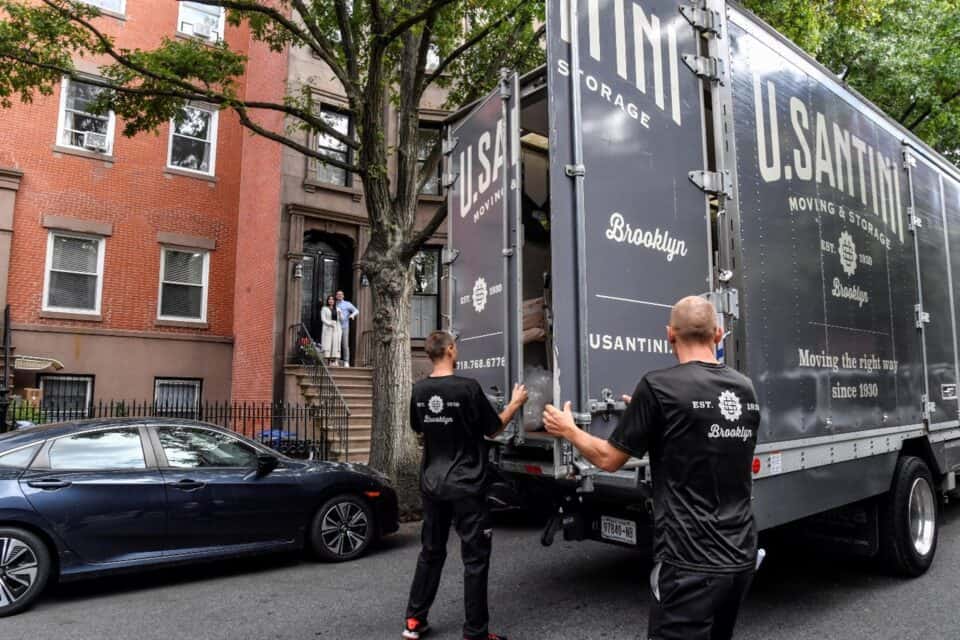
Most guides list neighborhoods based on vibes alone. But in 2025, vibe is only half the story. The other half is logistics. How hard is it to move a sofa into a third-floor walk-up? Does the building have a freight elevator? Is the street wide enough for a moving truck?
As professional movers in NYC who have navigated every narrow street and strict co-op board since 1930, we see the city differently. We see it in terms of square footage, stairwells, and Certificate of Insurance requirements.
Here’s our guide to where to live in NYC in your 20s, matched to your personality and grounded in logistical reality.
The Corporate Climber: Financial District
Best for: Finance, tech, and law professionals working long hours.
Five years ago, FiDi was a ghost town after 6 PM. In 2025, it’s arguably the smartest rental market for young professionals. Old office towers have been converted into luxury residential buildings, delivering amenities, doormen, gyms, roof decks, for the same price as a West Village walk-up.
The vibe: Sleek, high-rise, efficient. It’s not bohemian-cool, but it’s incredibly convenient. You’re a five-minute walk from nearly every subway line.
The 2025 reality: Rents have stabilized here, making FiDi a value play for luxury living. You trade neighborhood charm for a dishwasher and a gym.
Logistics level: Easy
Moving into FiDi is physically simple. Almost every building has a dedicated freight elevator and loading dock, no sweating up stairs. The challenge is administrative. You’ll need to reserve the freight elevator weeks in advance, typically for a strict two-hour window. Miss your slot and you aren’t moving in that day.
Pro tip: Request a sample COI (Certificate of Insurance) from building management immediately. FiDi buildings have the strictest insurance requirements in the city.
The Creative Hustler: Ridgewood, Queens
Best for: Artists, designers, and freelancers who need space to work.
For a decade, Bushwick wore the crown. But as rents climbed, creative energy migrated next door to Ridgewood. In 2025, Ridgewood is what Brooklyn used to be: authentic, slightly gritty, and buzzing with community.
The vibe: Historic yellow-brick row houses, vintage shops, quiet cafes. It feels like a neighborhood, not a party zone.
The 2025 reality: Rents rose over 7% last year as Ridgewood became the “it” neighborhood. It’s no longer a secret, move fast if you’re interested.
Logistics level: Hard
You’ll get more square footage here. We often move people into railroad apartments, long, narrow layouts ideal for home studios. But the streets are notoriously tight. Moving trucks frequently can’t park in front of buildings, which means long carries for your crew.
The bigger issue: Ridgewood is walk-up territory. Measure your furniture before you buy it. A 90-inch sectional will not fit up the narrow, twisting staircases of a pre-war row house.
The Social Butterfly: Lower East Side & East Village
Best for: People who want nightlife, brunch, and energy around the clock.
If you moved to NYC to live, this is where you go. It’s loud, gritty, and historically significant. You’re paying for location, not square footage.
The vibe: Iconic. Steps from the best dive bars, comedy clubs, and music venues in the world.
The 2025 reality: These apartments are tiny, “bathtub in the kitchen” tiny. But if you’re out every night anyway, who cares?
Logistics level: Nightmare
Moving here is a logistical war zone. Streets are permanently clogged with traffic, double-parked delivery trucks, and outdoor dining structures. Most buildings are five-story walk-ups with narrow hallways and tighter staircases.
Navigating a queen-sized mattress up a spiral tenement staircase is not a DIY project. This is one neighborhood where hiring experienced movers pays for itself in avoided damage, and avoided back injuries.
The Community Seeker: Astoria, Queens
Best for: People who want a neighborhood feel, tree-lined streets, and maybe a dog.
Astoria is the undefeated champion of livability. A 20-minute commute to Midtown, but it feels like a different world entirely.
The vibe: A massive, diverse small town. Incredible food spanning Greek, Egyptian, and Brazilian cuisines. Astoria Park for weekend runs. Friendly, unpretentious neighbors.
The 2025 reality: Rents have risen, but you still get significantly more space for your money than anywhere in Brooklyn.
Logistics level: Medium
Parking is easier here than in Manhattan or North Brooklyn. Streets are wider, and buildings tend to be more accessible, many are low-rises with generous stairwells.
The trade-off: the N/W train is your lifeline. When it’s down for weekend repairs, you’re stranded.
A 2025 Renter’s Warning: The Good Cause Effect
Before signing a lease anywhere, understand the biggest change in NYC housing: the Good Cause Eviction law.
Passed in 2024, this law protects tenants in many market-rate apartments from unreasonable rent increases (generally capped around inflation plus 5%) and unfair non-renewals.
Why it matters: If you rent in a covered building, typically constructed before 2009 and owned by larger landlords, you gain real stability. You can likely stay for years without your rent doubling.
How to check: Ask the broker directly: “Is this unit covered by Good Cause Eviction protections?”
The Verdict: Where Should You Live in NYC in Your 20s?
Choose FiDi if you value efficiency over charm and want amenities without the hassle.
Choose Ridgewood if you need space and creative energy, and you don’t mind stairs.
Choose the LES if sleep is overrated and you came here to live loud.
Choose Astoria if you want an actual home, not just a place to crash.
New York is a city of micro-neighborhoods. The difference between 4th Street and 14th Street can feel like a different continent. Take your time. Walk the blocks at night. And when you’re ready to make the move, hire a moving team that knows the difference between a freight elevator building and a fifth-floor walk-up.
Welcome to New York.